Taking Antibiotics? Here’s How to Support Your Gut Before, During, and After.
Written by Jessica Diakoumakos, Naturopath (BHSc Naturopathy) · Emba Wellness, Melbourne · Updated 15.04.2026
Antibiotics disrupt the gut microbiome by killing not just pathogenic bacteria but also beneficial species — reducing microbial diversity and increasing risk of side effects including diarrhoea, bloating, and fatigue. Evidence-based strategies to support the gut during and after antibiotics include taking clinically trialled probiotic strains (spaced 2–3 hours from antibiotic doses), increasing dietary fibre and polyphenols, avoiding processed foods and alcohol, and supporting the gut microbiome during recovery with targeted nutrition and herbal medicine.
Antibiotics can be absolutely essential when we need them—but they don’t just target the "bad" bacteria. They also impact the good bacteria that keep our gut microbiome healthy (Elvers et al., 2020). This disruption can lead to side effects like bloating, diarrhoea, fatigue, and even long-term imbalances like SIBO (Small Intestinal Bacterial Overgrowth) and IBS (Irritable Bowel Syndrome).
The good news? There are simple, science-backed steps you can take to support your gut through the process.
Here’s how to look after your microbiome before, during, and after a course of antibiotics.
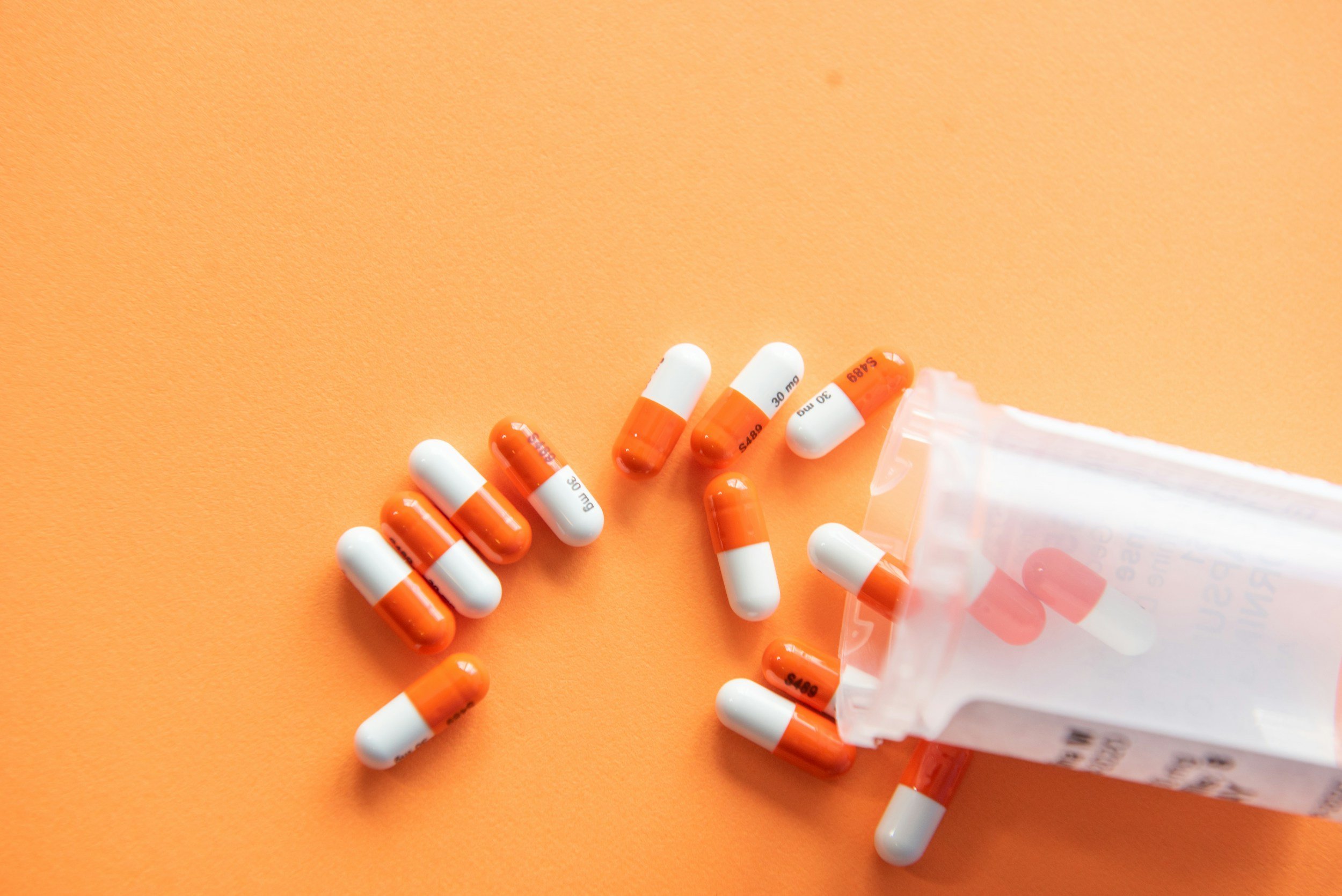
1. Yes, You Should Take Probiotics (Just Not at the Same Time).
Let’s clear this up: taking probiotics during a course of antibiotics is a good idea—just make sure you space them out.
Taking a probiotic 2–3 hours after your antibiotic can help reduce side effects like diarrhoea and protect your microbiota during treatment. It’s one of the simplest ways to reduce disruption and start rebuilding your gut while you're still on medication.
2. Choose the Right Strains (and Enough of Them).
Not all probiotics are created equal. If you’re taking them alongside antibiotics, look for:
Lactobacillus rhamnosus GG (Szajewska & Kołodziej, 2015; Szajewska et al., 2006)
Bifidobacterium animalis subsp. lactis BB-12 (Merenstein et al., 2021)
Saccharomyces boulardii (CNCM I-745) (Spatz et al., 2023)
These strains are backed by clinical trials for their ability to support the gut during antibiotic use and reduce the risk of side effects.
TIP: Check the label for at least 1 billion CFU (colony-forming units). This is the minimum dose shown to have clinical benefits.
3. Feed the Good Guys
After antibiotics, your gut needs the right fuel to grow beneficial microbes back.
That fuel? Fibre and polyphenols.
Think oats, legumes, garlic, onions, berries, flaxseeds, dark chocolate, leafy greens, and extra virgin olive oil. These plant compounds help your gut bugs produce short-chain fatty acids (SCFAs), which are critical for gut lining repair, immune balance, and lowering inflammation (Penumutchu et al., 2023).
More plant diversity = more microbial diversity = better recovery.
Read more about the importance of plant food diversity here.
4. What Not to Do While Your Gut’s Healing
Healing your gut means creating an environment where beneficial microbes can thrive. Here’s what to avoid:
Processed foods: High sugar and refined oils feed the wrong microbes and drive inflammation (Bevilacqua et al., 2024).
Alcohol: Especially in excess, it damages the gut lining and reduces microbial diversity (Engen et al., 2015).
Skipping meals or restrictive diets: Your gut bacteria need regular fuel—don’t starve them.
Too much caffeine: This can irritate your gut, especially if consumed on an empty stomach and increase diarrhoea (Saygili et al., 2024).
Chronic stress: Stress is one of the biggest gut disruptors. Support your nervous system with rest, breath work, and slowing down - read more about the gut-brain connection here.
5. Can Antibiotics Trigger Ongoing Gut Issues Like IBS?
In short: yes.
Antibiotics can wipe out protective bacteria, and in some cases, this disruption can:
Reduce beneficial gut microbes and microbiota diversity
Increase the risk of developing IBS
Contribute to long-term bloating, food sensitivities, and irregular bowel movements
Frequent antibiotic use in childhood is even associated with a higher lifetime risk of IBS (Mamieva et al., 2022).
“If your gut still feels off weeks after finishing antibiotics — that’s not just how it is. That’s a sign your microbiome needs targeted support, not more time.”
Frequently Asked Questions
-
Yes — research supports taking probiotics during antibiotic treatment, but timing matters. Take your probiotic 2–3 hours after your antibiotic dose so the antibiotic doesn't kill the probiotic strains before they can act. Clinically trialled strains for use alongside antibiotics include Lactobacillus rhamnosus GG, Bifidobacterium animalis subsp. lactis BB-12, and Saccharomyces boulardii CNCM I-745. Look for a minimum of 1 billion CFU on the label.
-
Research shows that gut microbiome disruption from antibiotics can persist for weeks to months after a course is completed — and in some cases, certain bacterial species may not return to pre-antibiotic levels without targeted support. The timeline varies depending on the type and duration of antibiotics, your baseline microbiome health, diet during recovery, and whether targeted probiotic and prebiotic support is used. A course of broad-spectrum antibiotics can cause more significant and longer-lasting disruption than a narrow-spectrum course.
-
Yes — research has established a link between antibiotic use and increased risk of developing IBS, particularly post-infectious IBS. Antibiotics can reduce protective bacterial species, increase intestinal permeability, and alter gut motility. Frequent antibiotic use in childhood has been associated with higher lifetime risk of IBS. If you've developed persistent bloating, irregular bowel habits, or food sensitivities following a course of antibiotics, gut-directed naturopathic support and functional testing can help identify what's happening and guide recovery.
-
Focus on high-fibre, high-polyphenol plant foods that feed beneficial gut bacteria and promote short-chain fatty acid production — including oats, legumes, garlic, onions, leeks, berries, flaxseeds, leafy greens, and extra virgin olive oil. Fermented foods such as plain yoghurt, kefir, sauerkraut, and kimchi can also introduce live beneficial bacteria. Aim for 30 or more different plant foods per week to support microbiome diversity during recovery.
-
Consider naturopathic support if you experience persistent gut symptoms — bloating, irregular bowel habits, food sensitivities, fatigue, or skin changes — following a course of antibiotics, particularly if symptoms don't resolve within a few weeks. Functional testing including Microba microbiome profiling and SIBO breath testing can identify specific disruptions, and a targeted treatment plan using nutrition, herbal medicine, and evidence-based probiotic therapy can support recovery more effectively than a generic approach.
Still Feeling Off? Here’s How I Can Help.
If your gut still feels off after antibiotics — persistent bloating, irregular bowel habits, fatigue, or food sensitivities — you don't have to just push through it.
As a Microbiome Analyst, I take a root-cause approach: looking at what's actually happening in your gut through functional testing, and building a targeted recovery plan with nutrition, herbal medicine, and evidence-based probiotic therapy.
Or learn more about microbiome testing at Emba Wellness

Emba Emails.
references.
Bevilacqua, A., Speranza, B., Racioppo, A., Santillo, A., Albenzio, M., Derossi, A., Caporizzi, R., Francavilla, M., Racca, D., Flagella, Z., De Santis, M. A., Elia, A., Conversa, G., Luchetti, L., Sinigaglia, M., & Corbo, M. R. (2024). Ultra-Processed Food and Gut Microbiota: Do Additives Affect Eubiosis? A Narrative Review. Nutrients, 17(1), 2. https://doi.org/10.3390/nu17010002
Elvers, K. T., Wilson, V. J., Hammond, A., Duncan, L., Huntley, A. L., Hay, A. D., & van der Werf, E. T. (2020). Antibiotic-induced changes in the human gut microbiota for the most commonly prescribed antibiotics in primary care in the UK: a systematic review. BMJ open, 10(9), e035677. https://doi.org/10.1136/bmjopen-2019-035677
Engen, P. A., Green, S. J., Voigt, R. M., Forsyth, C. B., & Keshavarzian, A. (2015). The Gastrointestinal Microbiome: Alcohol Effects on the Composition of Intestinal Microbiota. Alcohol research : current reviews, 37(2), 223–236.
Mamieva, Z., Poluektova, E., Svistushkin, V., Sobolev, V., Shifrin, O., Guarner, F., & Ivashkin, V. (2022). Antibiotics, gut microbiota, and irritable bowel syndrome: What are the relations?. World journal of gastroenterology, 28(12), 1204–1219. https://doi.org/10.3748/wjg.v28.i12.1204
Merenstein, D., Fraser, C. M., Roberts, R. F., Liu, T., Grant-Beurmann, S., Tan, T. P., Smith, K. H., Cronin, T., Martin, O. A., Sanders, M. E., Lucan, S. C., & Kane, M. A. (2021). Bifidobacterium animalis subsp. lactis BB-12 Protects against Antibiotic-Induced Functional and Compositional Changes in Human Fecal Microbiome. Nutrients, 13(8), 2814. https://doi.org/10.3390/nu13082814
Penumutchu, S., Korry, B. J., Hewlett, K., & Belenky, P. (2023). Fiber supplementation protects from antibiotic-induced gut microbiome dysbiosis by modulating gut redox potential. Nature communications, 14(1), 5161. https://doi.org/10.1038/s41467-023-40553-x
Saygili, S., Hegde, S., & Shi, X. Z. (2024). Effects of Coffee on Gut Microbiota and Bowel Functions in Health and Diseases: A Literature Review. Nutrients, 16(18), 3155. https://doi.org/10.3390/nu16183155
Spatz, M., Wang, Y., Lapiere, A., Da Costa, G., Michaudel, C., Danne, C., Michel, M. L., Langella, P., Sokol, H., & Richard, M. L. (2023). Saccharomyces boulardii CNCM I-745 supplementation during and after antibiotic treatment positively influences the bacterial gut microbiota. Frontiers in medicine, 10, 1087715. https://doi.org/10.3389/fmed.2023.1087715
Szajewska, H., & Kołodziej, M. (2015). Systematic review with meta-analysis: Lactobacillus rhamnosus GG in the prevention of antibiotic-associated diarrhoea in children and adults. Alimentary pharmacology & therapeutics, 42(10), 1149–1157. https://doi.org/10.1111/apt.13404
Szajewska, H., Ruszczyński, M., & Radzikowski, A. (2006). Probiotics in the prevention of antibiotic-associated diarrhea in children: a meta-analysis of randomized controlled trials. The Journal of pediatrics, 149(3), 367–372. https://doi.org/10.1016/j.jpeds.2006.04.053